
What makes equipment ‘fleet grade’ vs standard commercial equipment?
There’s a reason why an office printer looks nothing like your printer at home. Or why the coffee machine in your kitchen fits neatly on the counter — but the ones in hotels look like industrial installations.
It’s the same divide we see in vehicle workshops: the difference between ‘fleet-grade’ workshop equipment, and the standard commercial equipment.
For fleet managers and engineers, who need relentless equipment running day and night, there’s a stark difference in the equipment they buy.
Here’s what matters for fleet-grade workshop equipment, and why standard commercial equipment won’t always be up to scratch:
Durability and uptime
Like the hotel coffee machine, fleet-grade equipment is designed for continuous use. In some fleet workshops, it’s running 24/7, with multiple shifts of vehicle servicing.
So if you’re operating a fleet (and especially with heavy-duty vehicles), you need equipment that can survive high demand without a break.
That means stronger construction, reinforced materials, and heavy-duty components that won’t easily fatigue or break.
But it’s also about minimising downtime: designing equipment that can last as long as possible without servicing, repairs, or replacement parts.
In some cases, that even extends to the internal layout of the equipment itself: making fast-wearing parts easily accessible for service engineers to reduce the disruption of repairs (and get your equipment up and running as soon as possible).
Fleet-grade equipment is built for:
- Continuous 24-hour use
- High resistance to fatigue and heat build-up
- High IP ratings to protect against water and dust
- Long periods between servicing and repairs
- Fast repairs with accessible parts to minimise downtime
Speed of service
Plenty of fleet workshops are overwhelmed with vehicles, with a never-ending stream of servicing just to keep up. That means every minute counts, and throughput is a priority.
Fleet-grade workshop equipment is designed for exactly that: focusing on fast diagnosis and short repair times to get your vehicles back on the road.
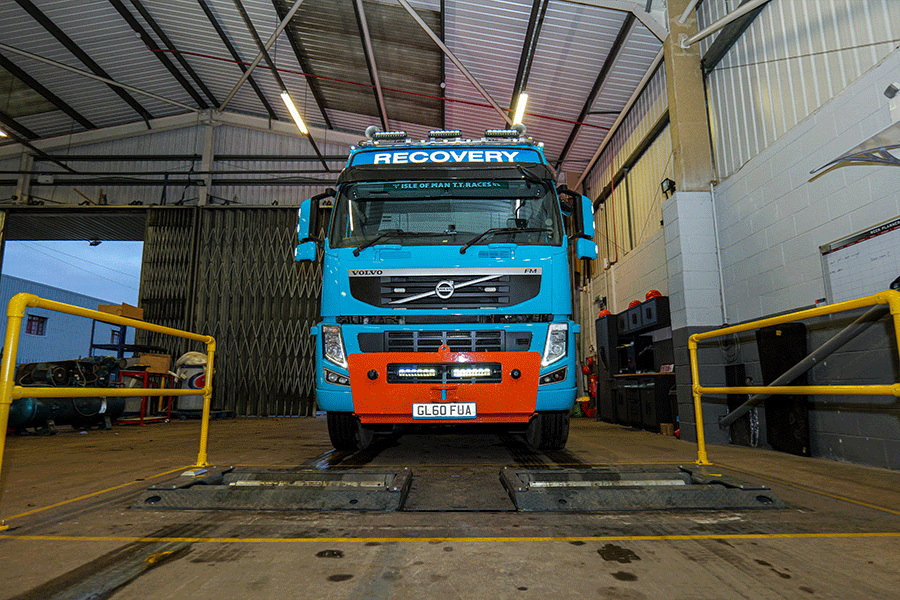
That could mean all-in-one, drive-through workstations with minimal setup or movement (like a compact inspection pit with a brake tester). Or it could mean entirely automated processes that save time — like the Quick Check Instant Wheel Alignment system.
Fleet-grade equipment helps throughput:
- Automated processes and tech
- Wireless communication with control units
- Drive-through testing and lifting stations
- All-in-one stations to stack services without moving vehicles
Advanced safety features
With continuous use and the demand for higher throughput, your equipment can get pushed to the limits of its capacity. That means more fatigue, more structural stress, and a higher risk of incidents.
On top of that, a busy fleet workshop can push the limits of its teams, too. High demand and the pressure to keep up can put stress on your technicians — with a higher risk of human error or poor judgment.
With these high stakes, fleet-grade equipment needs to be the safest it can be, with modern safety features to protect your equipment and your teams. That could mean overload valves on your hydraulic press, or emergency stop buttons on your vehicle lifts.
Fleet-grade equipment is safer with:
- Mechanical safety locks
- Overload protection
- Emergency isolation controls
- Compliance with the strictest safety regulations
Versatility
While standard vehicle workshops usually cater to a narrow range of vehicles, fleet workshops need to be ready for more. Especially in mixed fleets that could range from LCVs up to HGVs or agricultural vehicles.
That means being ready with:
- Tyre changers for different wheel sizes
- Diagnostic equipment with multi-brand capability
- Vehicle lifts that work with both longer and shorter vehicles.
A well as being flexible with different types of vehicles, you also need to be flexible for different levels of demand:
With fleet-grade mobile equipment (like a set of mobile column lifts or a mobile brake tester), you can scale the number of workstations up and down as you need them — or even add new stations in an outside area to cope with increased demand.
Upgrading your fleet workshop?
We’ve got a full range of fleet-grade workshop equipment ready to go.
As well as supplying the kit that keeps fleets running, we’ve got experts on hand who know what shops need to keep their fleets up and running.
So if you’re looking for new equipment (or need some advice), start a chat with one of our workshop specialists — we’ll talk you through your options to help you find the right fit.