
All You Need To Know About Wheel Balancing
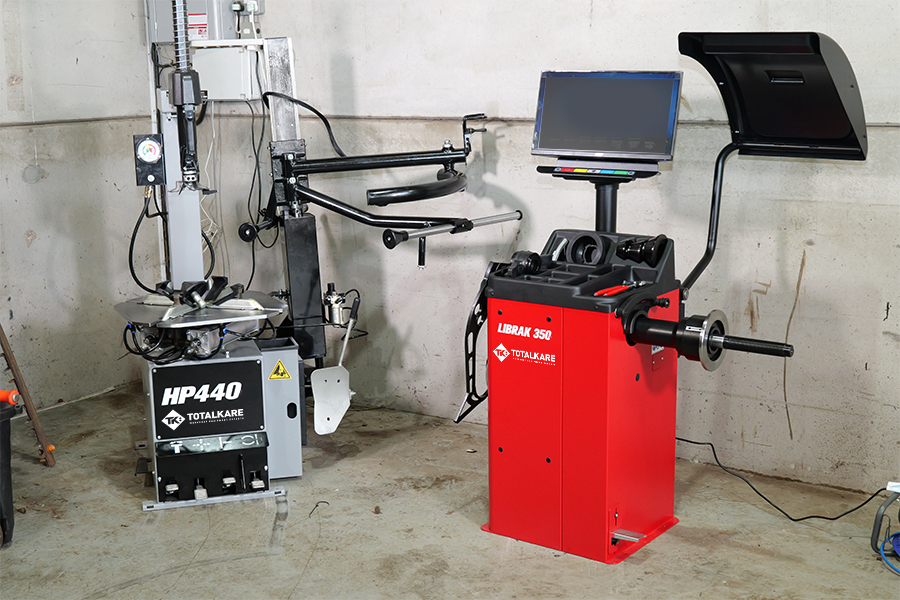
We all know efficiency is a top priority if you run a workshop or manage a large vehicle fleet, and not just the efficiency of your vehicles on the road but within all the services you carry out.
That’s where Totalkare’s Wheel Balancers can help with both.
As an essential part of vehicle maintenance and service, wheel balancing helps extend tyre lifespan, improve fuel efficiency and reduce unnecessary wear. With the right equipment, it’s also a quick and easy process that helps get vehicles back onto the road with minimal downtime.
Here’s all you need to know about wheel balancers – how they work and what you should be looking for:
Is wheel balancing the same as wheel alignment?
Wheel balancing and wheel alignment are often grouped together, especially within the conversation of tyre wear and steering wheel vibrations, but they are two very different services and both essential for keeping healthy tyres.
Wheel alignment is about adjusting the suspension, measuring the angles of the wheel and how it connects to the vehicle.
Wheel balancing focuses on weight distribution. The wheel is measured as it spins and small balancing weights are added to counteract any imperfections of the wheel.
So how does a wheel balancer actually work?
All about wheel balancing
Most wheel balancers are based on the same basic concept…
The wheel is mounted onto a spindle, which spins the wheel at speed, while sensors measure the wheel’s weight distribution and identify any imbalances. Most modern wheel balancers use optical sensors to measure how the wheel moves while it’s rotating.
Once the weight distribution has been measured, the wheel balancer can tell you exactly where the imbalance is and how much there is. This data allows technicians to indentify the precise amount of weight required and exactly where it should be fitted.
Here’s how it works:
- Mounting and measuring
The first step is mounting the wheel on the balancer. Once it’s securely attached using the supplied cones and quick nut to lock it into place, the wheel dimensions can be measured.
This can be measured with an external gauge – like the one found on our Wheel Balancer 350, or an ultrasound width gauge found on our Wheel Balancer 360WS. - Running the cycle
Once the wheel is securely locked into place and the width has been measured, the safety hood can be lowered and the wheel balancing cycle is started using the controls on the LCD display.
For modern Wheel Balancers, this starts an automatic cycle which spins the wheel on the spindle and measures the weight balance of the wheel and tyre via the optical sensor.
Once the cycle has completed and the wheel balancer has the measurements, the results will show on the screen as a full graphical readout. This will include the out-of-balance values and their position on the wheel, as well as the exact weights you need to attach to correct them. - Attaching the weights
At the end of the cycle, the wheel can be locked into position using the wheel brake, which is typically operated by a foot pedal at the base of the machine.
Now you can start attaching the weights to help balance the wheel.With some of the more advanced models of wheel balancers (such as our Light Commercial 360WS Wheel Balancer), there will be a laser pointer to assist with guiding to ensure precise positioning for the weights. This helps reduce human error and gives a higher level of accuracy in the overall process of measuring and balancing the wheels.
And the result? In just a few minutes, your wheel is corrected by the guided balancing programme, and will help extend the lifespan of tyres and wheels as well as reducing driver fatigue of your drivers by providing a quick and automated solution.
What can our wheel balancers do for you?
If you’re a busy workshop manager responsible for maintaining large vehicle fleets, modern wheel balancing equipment can deliver significant benefits to a workshop. By automating the balancing process and increasing throughput, the efficiency of the team in the workshop and on the road will also increase and boost the safety of vehicles and drivers too.So if you’re looking to improve turnaround times and deliver more accurate results, explore our full range of Totalkare Wheel Balancers on our web shop, or talk to one of our workshop experts to help choose the right equipment for your wheel servicing needs.