
How to manage the costs of building a commercial vehicle workshop
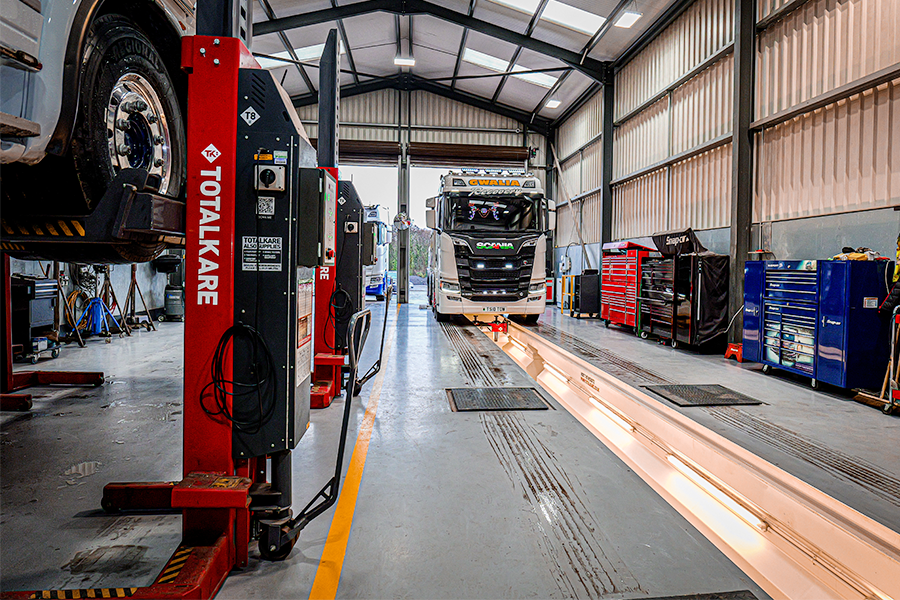
For both young businesses and expanding fleets, building a new workshop can come with massive costs.
But while those costs should always be seen as an investment, that doesn’t mean you can’t take steps to reduce them.
Here’s how to manage the build costs of a new workshop — and the steps you can take to ease the pressure on your cash flow:
Budget for everything
Seasoned fleet operators will know exactly what’s involved. But for new businesses taking their first steps, not every cost is obvious at first glance.
So before the first hammer hits a nail, you need a full understanding of the costs behind your:
- Permits — including planning applications, environmental reports, and compliance with local councils
- Building construction — with requirements for high ceilings and heavy-duty flooring that can add to the cost
- Equipment — not just the tools themselves, but the costs of installation and groundworks
- Utilities — including water, electricity, heating, and IT infrastructure.
With a thorough understanding of every cost involved, you can start to find ways to make savings on your budget — without sacrificing on quality or safety.
Look at prefabricated solutions
Modular buildings have been revolutionary for the construction industry — and it’s no different when you’re looking at the costs of building a workshop.
With prefabricated structures, you can cut down on the labour costs of workshop builders spending weeks on-site at your premises. You can benefit from the tight efficiency of a purpose-built factory that’s designed to produce your structures, instead of a team of builders who need to assess your site and work around the limitations you might have.
On top of that, using modular buildings can also help you get your workshop up and running sooner:
Because the construction happens off-site, you can get the process started before you officially buy or lease the land. With some careful timing, you can have a near-finished structure arriving as soon as you start paying for the location — which means less time and money wasted on ‘dead’ space before you start trading.
But it’s not just construction that can benefit from a prefab solution:
If you’re planning to use an inspection pit, you can choose a prefabricated pit for your workshop — giving you the same efficiencies in assembly and installation, as well as a perfectly sealed unit to help it last for years to come.
Lease equipment to help your cash flow
For a full-service commercial workshop, the equipment you buy counts for a huge chunk of the budget you start with.
It’s a heavy burden for any new workshop — but especially for a new business that needs to make back that investment.
That’s why lots of workshops look into leasing options with their equipment suppliers. Instead of dropping hundreds of thousands of pounds into a fresh business on day one, you can spread the cost of your equipment over the coming months (when you’ll start to see revenue coming in).
So what does that look like in practice? It could mean:
- Short-term hire — to keep your cash flow healthy in the earliest days
- Long-term lease hire — to keep you going until you’re ready to buy later
- Lease purchase — to reduce the monthly strain and eventually own the equipment.
As well as supplying equipment as an upfront purchase, we also offer finance options for many of our ranges — so you can get the equipment you need without straining your cash flow.
Choose refurbished equipment
If you’re setting up shop on a limited budget, pre-owned equipment could be the most cost-effective choice for your workshop.
The best workshop equipment is always built to last. And that’s as true for older equipment as it is for the newer models.
But you need to choose carefully:
With any pre-owned equipment (and especially with heavy-duty machinery), you need to be sure it’s been refurbished by an expert team with a strong reputation.
Our pre-owned mobile column lifts, for example, are given the highest levels of care and attention from a skilled team of in-house engineers.
So before you choose anything pre-owned, talk to your supplier about the refurbishment process they use. You should hear an answer that includes:
- Stripping and full repair
- Replacing components
- Load testing and inspections
- And a Report of Thorough Examination by an independent engineer.
That’s the process we use here at Totalkare — and it’s why we’re confident enough to include a 6-month warranty on parts and labour for every pre-owned column lift we sell.
Make use of incentives and grants
For both new businesses and expanding fleets, the government has a range of financial incentives and support to help take the strain off your budget.
That could mean something small, like the Workplace Charging Scheme, which can cover up to 75% of the costs of installing EV charging infrastructure.
But there are larger gains, too — like the government’s Full Expensing scheme (which replaced Super Deduction).
With Full Expensing, certain companies can claim either 50% or 100% of the cost of some new machinery as a first-year tax allowance, helping to reduce the burden on their budget from the upfront investment on specific types of equipment.
You can see the complete details on the Full Expensing scheme on the government’s website — or use their on-site tool to see if you’re eligible.
Need some advice to keep your budget tight?
We’ve helped businesses of every size (and every budget) to build new workshops and upgrade their old ones.
So if you’re looking to set up shop or expand into new territories, our expert teams can help you make savings — with options for pre-owned equipment and financing arrangements.
Start a chat with one of our workshop specialists today — and we’ll help you get started with the best kit for your budget.