
Trolley jacks for commercial workshops: What should you look for?
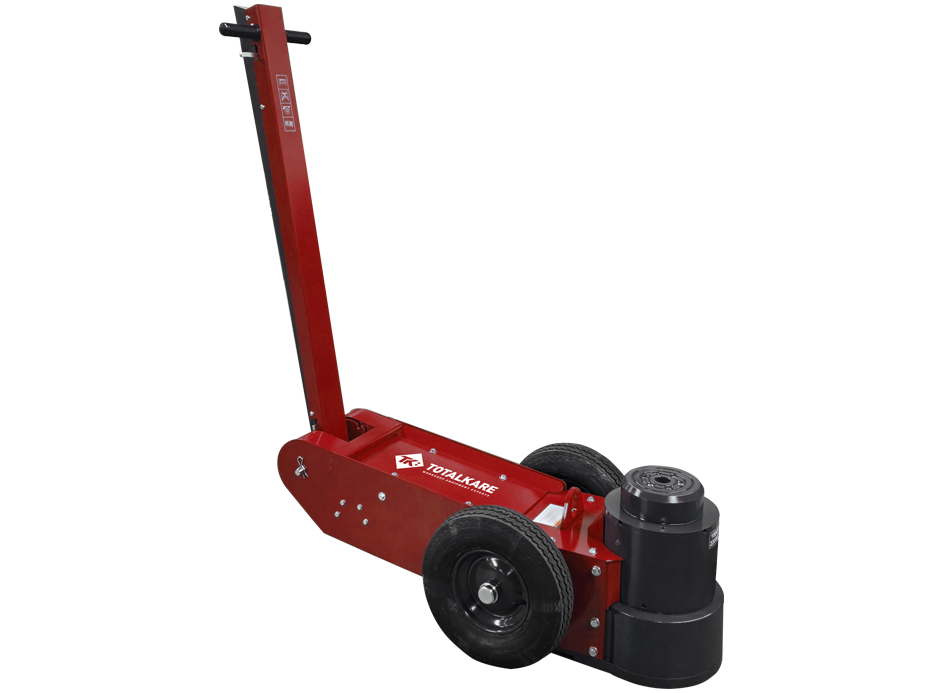
Trolley jacks for commercial workshops: What should you look for?
With so much focus on vehicle lifts and pits, trolley jacks for commercial workshops are sometimes seen as a secondary class of equipment.
But for workshops that value speed and productivity, trolley jacks an essential part of their daily toolkit, giving them a quick and mobile way of servicing LCVs, HGVs, and mixed fleets.
Here’s what you need to know before you buy — to get the right trolley jack for the vehicles in your workshop:
Are trolley jacks still relevant in commercial workshops?
The short answer: yes!
Lifts and inspection pits are great for extended services, giving you full access to the underside of the vehicle with plenty of room to manoeuvre. But it takes time and careful positioning to set them up — which means every use of a lift or pit is a commitment by your teams.
With a trolley jack, you’re able to:
- Lift a single axle to service specific areas
- Position and raise the vehicle in a shorter time
- Set up a mobile trolley jack in unused areas of your workshop
- Lift more vehicles than usual (without occupying your normal lifting bays).
While a trolley jack will never fully replace a vehicle lift, it’s an essential ancillary tool designed to complement your lifts (and keep your lifts available for bigger jobs).
That means using a trolley jack for:
- Small repairs addressing local components
- Quick checks and inspections that don’t need a full lift
- Vehicles with low clearance or deep lifting points (where using a vehicle lift is more complex).
Choosing the right lifting capacity for your vehicles
Trolley jacks come with their own ratings for lifting capacities: usually in tonnes or thousands of kg.
For example: our high-capacity trolley jacks for commercial workshops cover a range of capacities, from 4 tonnes (4,000kg) up to 15 tonnes (15,000kg).

High-capacity trolley jacks
(from 6 to 10 tonnes)
These ratings are slightly different than with a vehicle lift, where the lift is designed to take the entire weight of the vehicle at once.
With a trolley jack, you’re lifting a single axle or a single corner of the vehicle — which means you don’t need a 15-tonne trolley jack to work on a 15-tonne vehicle.
But that doesn’t mean you should under-spec your trolley jacks. You’ll need to think about:
- Allowing an additional safe margin in your lifting capacity
- Vehicles with unusual lifting points (which may affect stability)
- The movement of the vehicle during lifting (which can change the forces applied)
- The axle load of the vehicle you’re lifting.
You can also find specialised trolley jacks with extremely high capacity, like our mining and construction trolley jacks (up to 150 tonnes). But for most vehicle workshops, you won’t need anything that high.
What about low-profile or high-lift trolley jacks?
Aside from the lifting capacity, there are three main types of trolley jack to think about:
- Low-profile trolley jacks
- Long-reach trolley jacks
- .
Low-profile trolley jacks are designed for vehicles with an especially low clearance — so they can slip under the vehicle to meet the lifting points.
Long-reach trolley jacks are designed for vehicles where the designated lifting points are harder to reach. These lifting points are usually deeper into the centre of the chassis (such as vehicles that are extra-wide).
High-lift trolley jacks (or high-level trolley jacks) are designed to raise vehicles even higher than usual — either for jobs that need extra space to work in, or for vehicles that already have a naturally high clearance from the ground.
In many cases, these extra-height jacks mean a lower lifting capacity. Our own high-level trolley jacks, for example, come with a maximum lifting capacity of 10 tonnes.

High-level trolley jacks
for extra height