
What should you look for in a railway lifting jack?
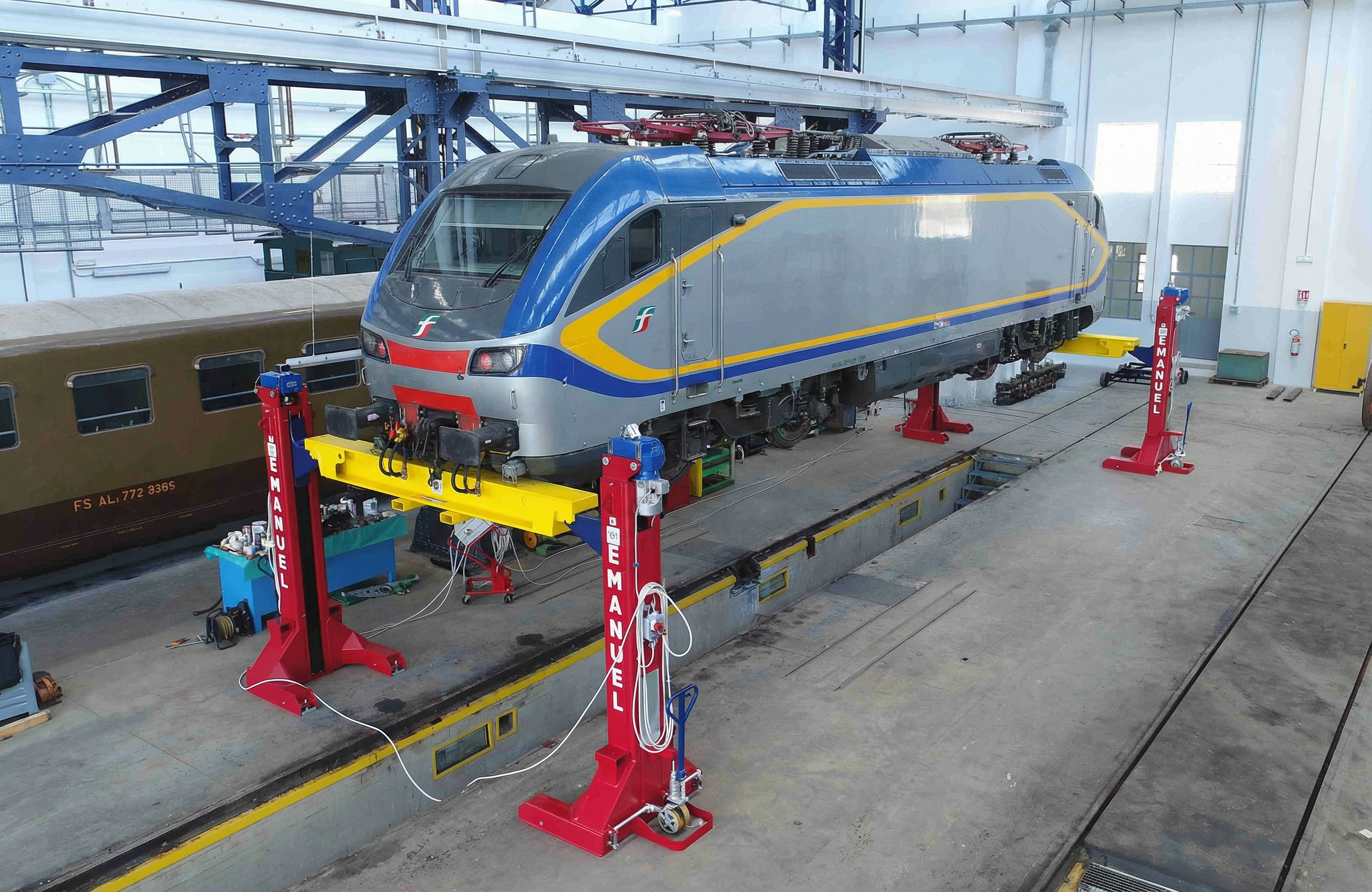
Like most bits of kit in a depot, a set of railway lifting jacks is a serious investment.
So if you’re looking to upgrade or replace your current rail lifting equipment, you need to know the features that matter – to futureproof your investment and get the most bang for your buck.
Here’s what you need if you’re investing in railway lifting jacks (and why these modern features matter for your workshop):
1. Futureproof capacity
For most rail depots, train lifting jacks are a core piece of their toolkit – so it makes sense to invest in something that can last for years or decades ahead.
That means high-quality equipment that’s durable and robust. But it also means thinking ahead to how the needs of your business could change in the future.
Before you buy, you should think about:
- The types of trains you service (and their weights)
- The types of trains you might expand into in the future
- The longest chain of carriages you need to service
- The length of chains you might service in the future.
We see some depots buying rail lifting equipment based only on the present: the trains they service now, and the lifting capacities they need.
But as your business grows and demand evolves, you could end up needing more, with new types of trains with higher weights, or longer chain of carriages that you service all at once.
So like most types of equipment, it’s better to over-spec than under-spec. With a set of railway lifting jacks with a higher capacity, you’ll be ready for the future without new upgrades — and your initial investment will last even longer.
2. Flexible configuration
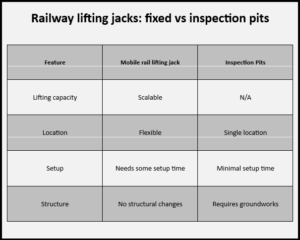
Fixed railway lifting jacks are great for consistency and high-volume servicing, especially if they’re built into an existing rail inspection pit.
But a set of mobile railway lifting jacks can give you so much more flexibility. As well as the ability to lift trains at different locations along the track, you can also group up the jacks in different configurations, giving you more lifting capacity (and allow for longer chains of carriages).
Our Totalkare Railway Lifting Jacks, for example, can be synchronised in groups from 4 up to 132 – giving you a potential maximum lifting capacity of 6.6 million kg.
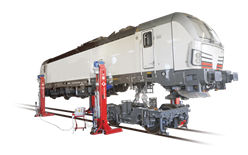
Small groups of lifting jacks |
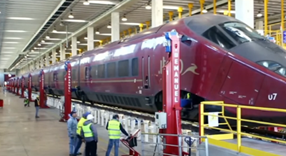 Large groups (up to 132) Large groups (up to 132)for long chains of carriages |
3. Remote control
If you’re lifting long chains of carriages, you’re looking at dozens of railway lifting jacks, often stretching 50 metres or more in your depot.
That’s a lot of area to cover, and it can be difficult to safely supervise the lifting operation. So if you’re buying a train lifting system for longer train, it’s essential that you choose one with remote control.
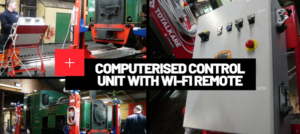
With a centralised control unit with a Wi-Fi remote that records and stores events, your teams can have complete control over the entire operation, and physically inspect and check the full length of your railway lift without leaving the controls behind.
4. Rail lifting jacks with an IP rating
As well as the mechanical servicing of the trains you lift, your teams also need to be able to wash and clean the underside of the carriages.
That makes it essential to choose a train lifting jack with the right IP rating (Ingress Protection) to keep your equipment safe from the dust and water involved in the cleaning process.
With our railway lifting jacks, that means an IP rating of 55 – giving you partial protection against dust and particulates, and protection against low-pressure jets of water.
Need some advice?
Upgrading your depot is a serious investment and our railway equipment experts are ready to help.
You can see our full range of rail depot equipment in our online shop (including railway lifting jacks and bogie lifting platforms) – or start a chat with one of our experts to talk about the options that make sense for your depot.