
How to safely lift unusually shaped vehicles
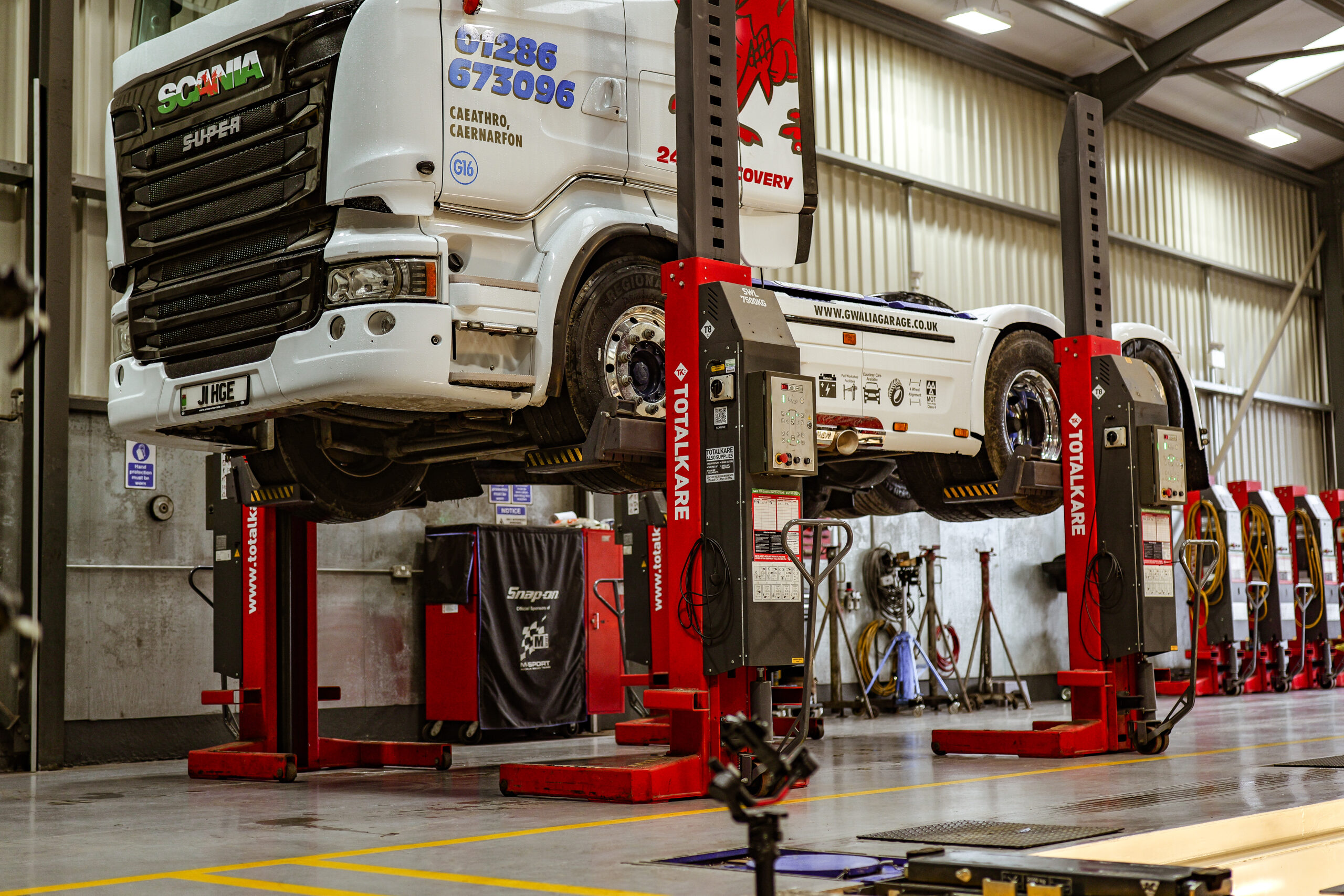
Most commercial workshops have it easy with their lifting:
Standard vehicles, standard lifts — and an awareness of the right lifting points and weight capacities.
But with some types of vehicles, lifting isn’t always so straightforward.
If your workshop needs to lift unusual-shaped vehicles, things can get more complex. And that can have an effect on the safety precautions you need to take.
Here’s what you need to know before you start lifting unusual-shaped vehicles:
Understand the weight distribution
Standard commercial vehicles are usually ‘boxy’ in shape. They come with a relatively even weight distribution, and a centre of gravity that’s not too far from the centre of their shape.
But unusual vehicles come with unusual weight distributions. And their centre of gravity isn’t always close to the middle.
So before you start lifting vehicles with an unusual shape, your teams need to carry out a full assessment of how the weight is distributed.
That usually means thinking about:
- Front-heavy vehicles — like the cab of a lorry without its trailer
- Back-heavy vehicles — like waste and refuse trucks
- Side-heavy vehicles — like a knuckle boom crane truck
- Top-heavy vehicles — like a forklift or a double-decker bus
Luckily, most vehicles come with manufacturer-approved lifting points to help your teams find the centre of gravity. But with any unusually shaped vehicle, it’s always good practice for your teams to assess the vehicle and get an idea of how the weight is distributed.
Use the right type of lift
Most lifts are designed to accommodate a wide range of vehicle sizes. However, when it comes to unusual shapes or uneven weight distribution, not all lifts perform equally well.
Take a two-post lift, for example — it relies on closely positioned contact points. This setup might not be ideal for vehicles that are front- or rear-heavy, where even a small nudge could shift the balance.
As a general guideline: the more lifting points involved, the more stable the setup. That’s why a four-post lift is often a better choice for vehicles with uneven weight — or even better, a coordinated set of 4 mobile column lifts.
With Totalkare Mobile Column Lifts, you can go further — using up to 8 columns in sync. This allows you to support larger vehicles with multiple wheels, distributing the lifting power more evenly across the structure for greater overall stability.
Create extra space
No matter what vehicles you’re servicing, you need enough overhead clearance when you’re lifting indoors.
But when you’re lifting unusually shaped vehicles, you need to think about horizontal space even more:
The typical lifting station in a workshop will come with enough space around it for the safe lifting of standard vehicles. But with different vehicle shapes, the same space might not still be safe.
Construction vehicles like loaders and backhoes come with articulated arms on the front and the back. Agricultural vehicles like combine harvesters and balers can come with extra-wide machinery that extends far beyond the wheels.
These unusual shapes take up more space than standard vehicles — which means you’ll need extra space around your workstation to keep the lifting safe and free from accidents.
And if your premises is short on floor space?
Lots of workshops choose mobile lifts for this exact reason — setting up agricultural column lifts in an outdoor area to give them the extra space they need to work safely on their specialised vehicles.
Balance the load
Most vehicles come with manufacturer-approved lifting points. But in some cases, you might need some extra support — especially with the most unusual or imbalanced shapes.
So to give your vehicles more stability where they need it (and give your teams more confidence), lots of workshops use specialised equipment to add more support.
After a thorough assessment of the vehicle’s weight distribution, your teams can strategically place heavy-duty Support Stands or Jacks in the best positions to keep your lifted vehicle stable — helping to counter any imbalances, and prevent any potential tilting or movement of the raised vehicle.
Need some help with unusual vehicles?
No matter what you’re lifting, we’ve got the kit for it.
Take a look through our full range of heavy-duty vehicle lifts and supporting equipment — or start a chat with a lifting specialist to see exactly how we can help.