
EMERGENCY SERVICE WORKSHOPS – THE IMPORTANCE OF MAINTAINING ‘BLUE LIGHT’ VEHICLE FLEETS IN AUTUMN AND WINTER
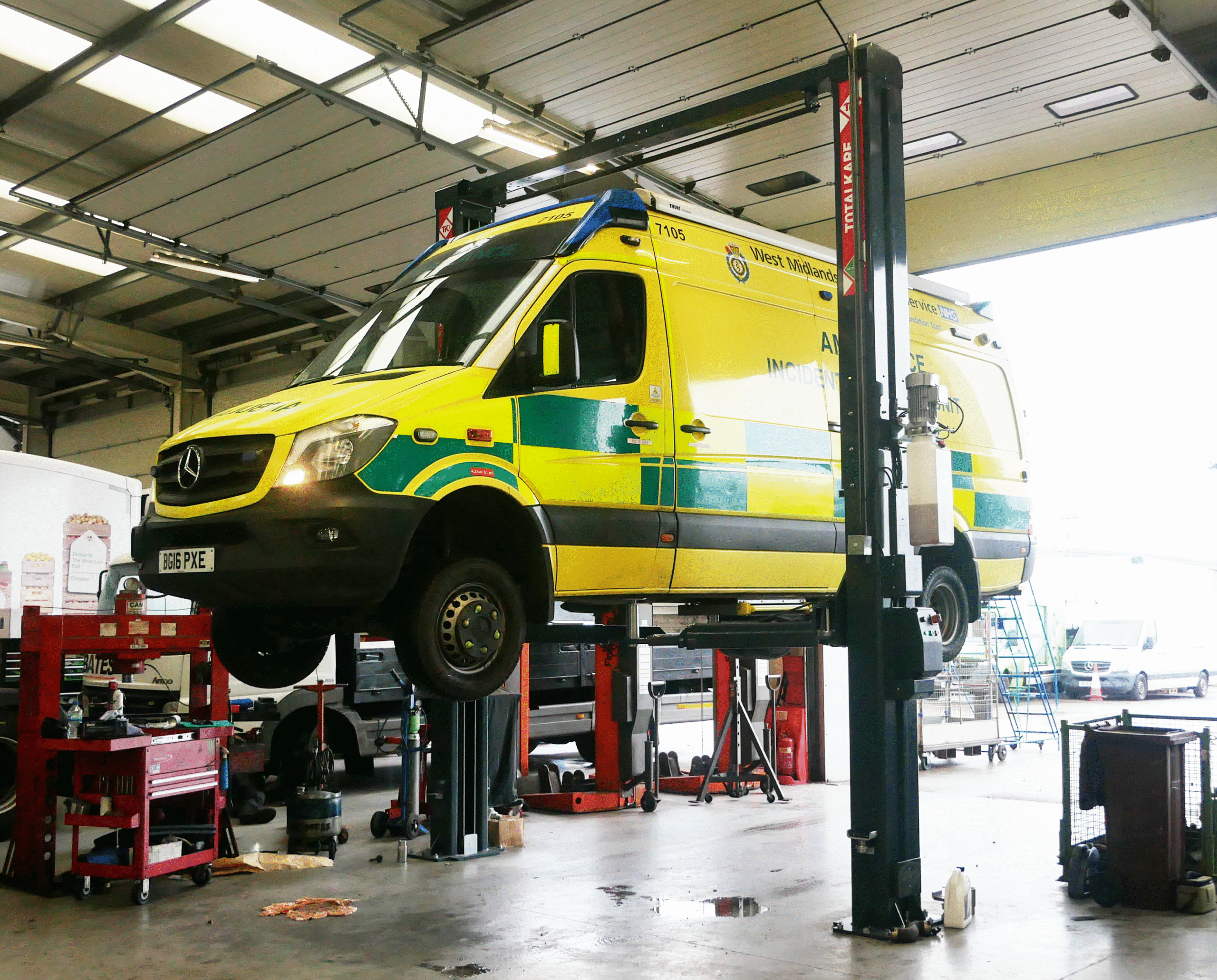
Emergency services across the UK can operate a large and varied fleet of response vehicles – with many travelling across the county – and these require regular and reliable testing, servicing, maintenance, and repairs (for example, breakdowns and damage) to ensure optimum safety and performance.
As standard, workshops dealing with emergency service vehicles will require essential supporting equipment, such as tyre changers, support stands, trolley jacks, lifts, and so on. However, when it comes to maintaining and checking ‘blue light’ vehicles in your own workshop, some specialist workshop equipment is also required…
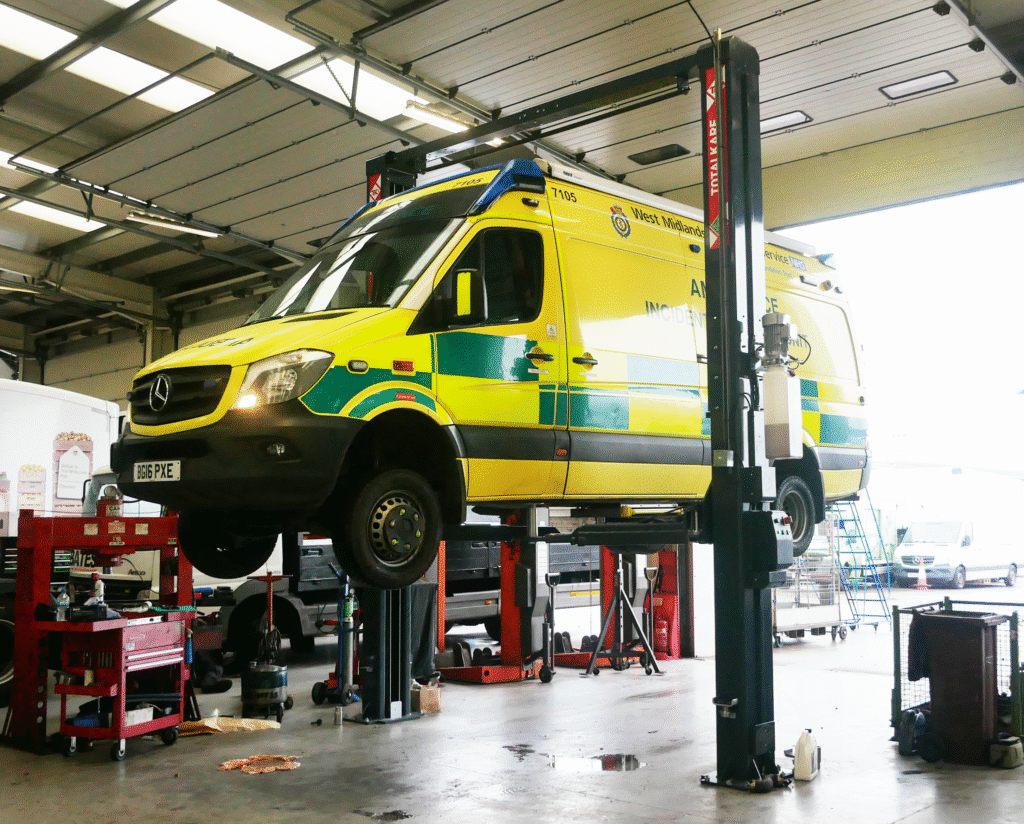
Generally for police and ambulances, our light commercial equipment – which is expertly designed for busy vehicle workshops maintaining long wheelbase vans, minibuses and other LCVs – will do the trick. Specific products might include the two post lift and lightweight four post lift ranges.
For fire services, our heavy duty vehicle lifts are more appropriate for lifting heavier goods. Our range caters to lifting loads from 12,000kg to 60,000kg. Specific products might include mobile column lifts, Y-MECH Lift, and even possibly a vehicle inspection pit – which makes it possible to work underneath a vehicle at the same time as above the vehicle which can increase productivity in your workshop.
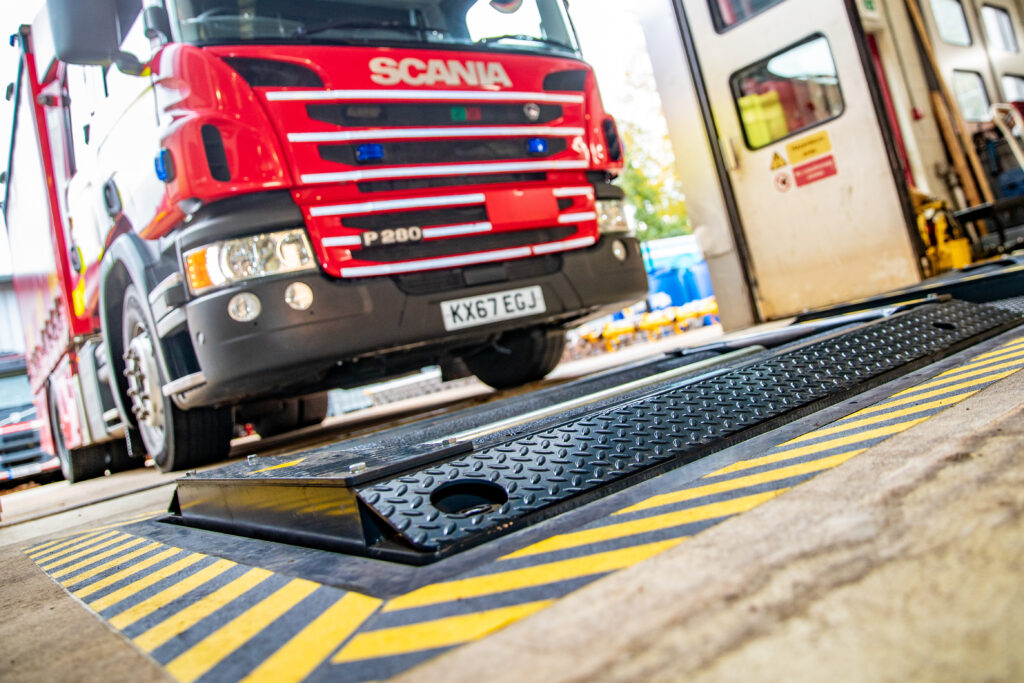
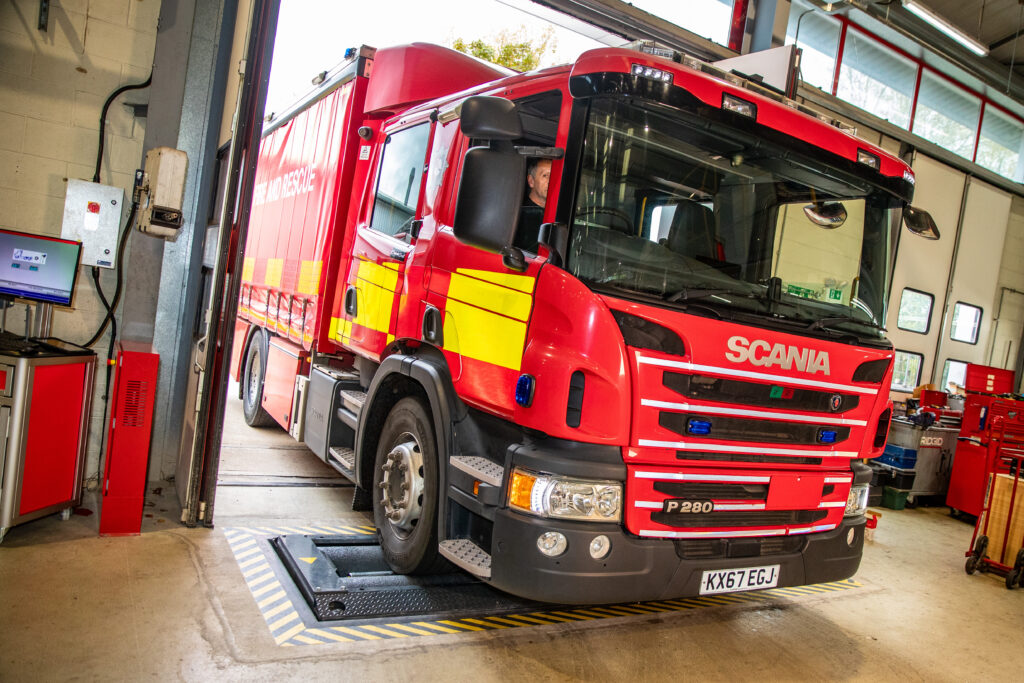
Earlier this year, Shropshire Fire and Rescue Service enhanced its in-house vehicle maintenance capabilities with the installation of an in-ground brake tester, which is designed to deliver fast, accurate brake test results across a range of vehicles and axle weights, making it ideal for heavy-duty use in fleet and emergency service environments. The unit was installed in the brigade’s main workshop, and the investment is part of Shropshire Fire and Rescue Service’s ongoing commitment to ensuring their vehicles remain in top condition and ready to respond when needed.
With operational fleet availability being vital for the timely response to emergency call outs, and to get an idea of the scale of this importance, we researched the vehicular operations of emergency service departments across the UK, as well as the specific seasonal risks for the coming months. To do so, we scoured various data sources and sent Freedom of Information requests to more than one hundred emergency service departments – focusing on ambulance, fire, and police services – and collaborated with third-party experts to share insights on some of the seasonal risks that could lead to an increase in ‘blue light’ call outs in the coming months.
Read on to find out what our research discovered…
Seasonal Health Hazards and Historic Ambulance Callouts
Speaking with various health experts – including paediatrician Dr Arindam Das, physician Dr Sadia Saeed, and medical director Dr Maria Knobel – we discovered some of the most common health hazards that can arise, with a specific focus on the latter months of the year.
Whilst each season carries hidden risks, in autumn and winter these can include health issues related to colder weather (including hypothermia and frostbite) and injuries from accidents (such as slips and falls in icy conditions). According to the experts, falls on icy paths are among the frequent causes of A&E attendances. Plus, seasonal events – such as Halloween, Bonfire Night, Christmas, and New Year – also come with their own unique risks, with dangers spanning choking hazards, burns, alcohol-related issues, and more.
But don’t let this ruin your plans or celebrations for the rest of the year – the experts reminded us that some simple safety steps (including careful planning with health and safety in mind, and adult supervision where children are involved) can go a long way in keeping you and your family safe and out of A&E!
With these seasonal health risks in mind, we reached out to NHS England to discover how many emergency calls they receive during this time of year. Data obtained through a Freedom of Information (FOI) request revealed that more than two and a half million (2,671,109) 999 calls were answered during October-December last year (2024) – equating roughly 29,000 per day – with an average call answer time of 7 seconds.
Data from Association of Ambulance Chief Executives shows that there were more than a quarter of a million category 1 (life-threatening emergencies) incidents between October and December 2024, with the figures climbing on the previous each month – October (~84,000), November (~84,000), and December (~93,000).
Our FOI request insights also shows that the mean average response time for category-1 calls between October and December 2024 was 8 minutes and 39 seconds, with the average 90th centile at 15 minutes and 24 seconds. For context, the aim for the average standard is 7 minutes and the aim for the 90th centile standard is 15 minutes.
Data obtained through the Freedom of Information (FOI) request to NHS England also showed that the count of emergency vehicles for NHS Trusts for the 2023/2024 year totalled 6,595, which works out as one per roughly 10,500 people in the UK population.
As urgent and emergency care (UEC) services perform a critical role in keeping the population healthy, ensuring consistent vehicular availability in emergency service fleets can mean the difference between life and death, ensuring critical response teams are ready to act without delay when every second counts.
Seasonal Fire Risks and Historic Fire Service Callouts
As well as health risks, the latter months of the year are also commonly associated with fire hazards – such as candles, bonfires, and those caused by electricals. Speaking with electrician Vishal Narbheram to uncover common electrical hazards that can result in fires in the home, he shared that in the autumn and winter months electrical usage peaks as we put a heavier demand on appliances, lighting, heating and decorations, which can all increase fire and shock risks. In particular, cooking appliances are consistently the leading cause of accidental house fires in the UK, accounting for just under half of all incidents.
According to fire and rescue incident statistics on Gov.uk, fire and rescue services (FRSs) in England attended 603,942 incidents in the year ending March 2025 – of these incidents, fires accounted for 24% (142,494), which was an increase of 2.5% compared with the previous year. More than 60,000 (61,649, or 43% of the fires recorded) if these were ‘primary fires’ – which are high-risk incidents involving property, casualties, or large numbers of fire appliances – and, sadly, in the year ending March 2025, there were 271 fire-related fatalities in 247 fatal fires.
Historic Police Callouts
As well as ambulance and fire services, the police play an important role in keeping the population safe – from crime prevention and law enforcement to community engagement.
By analysing historic 999 performance data on Police.uk, we found that there were almost three million (2,901,147) 999 calls between October and December in 2024 across the 44 police forces in the UK, equating to roughly 32,000 per day.
The police service works closely with fire, ambulance, and social services in crisis situations, and are often first on the scene in cases where emergency response is required (such as accidents, violent incidents, or natural disasters). Therefore, in order to serve and protect the public, access to an operational fleet of vehicles is essential to ensure the safety and security of all individuals and communities.
How Totalkare can Help with Servicing and Afterkare
Our service is one of the most appealing aspects to a ‘blue light’ workshop – with our Afterkare repairs and maintenance package you’ll get nationwide coverage to ensure that your products, if they break down, are up and running again as quickly as possible.
Having the expert eye of a professional engineer and regular service visits can help to prevent breakdowns and minimise your equipment repairs. But there are several everyday practices that can help avoid repairs on your vehicle lifts – for example, smooth operation, regular cleaning, and daily inspections can go a long way to keeping your lifts healthy and long-lasting.
A lack of vehicles can lead to gaps in coverage and slower response times… from fire engines to ambulances, our lifting and brake testing equipment helps the Emergency Services maximise vehicle availability through routine service and maintenance. Our quality workshop equipment keeps countless UK fleets on the road, so if you’re not sure which equipment is the best fit for your workshop’s needs, our friendly experts can help you to find the best fit!
—
FOI methodology:
- Freedom of Information requests were sent to 115 public authorities on 28/08/2025, spanning emergency services (including ambulance, fire and rescue, police), and also councils where appropriate
- These requests for information spanned four main topics – 1) historical emergency call out figures, average wait times for ‘blue light’ vehicles to arrive on scene, and vehicle fleet size (unit counts and insights into regularity of units being ‘out of action’)
- Entity level comparisons were not possible due to various caveats, such as inconsistencies with information shared between services – therefore, overall findings have been included in this content only
With special thanks to the third-party expert sources who shared their insights for this content, including:
- Dr. Arindam Das, a paediatrician verified on healthcare review platform Doctify
- Dr. Maria Knobel, medical director and co-founder at Medical Cert UK
- Dr Sadia Saeed, a physician and medical writer at Welzo
- Vishal Narbheram, an electrician with 15 years’ experience