
How to safely inspect petrol transport vehicles
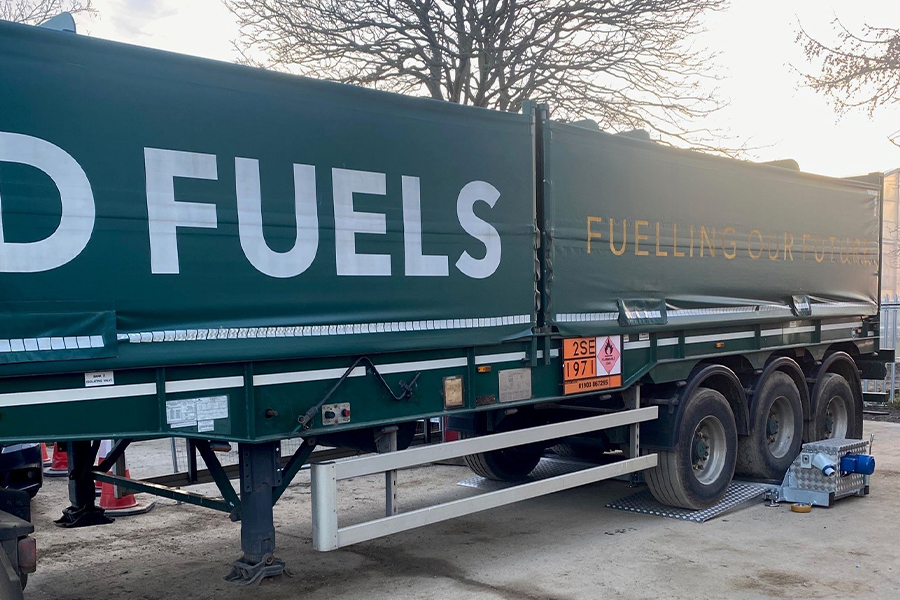
For workshops that deal with heavy-duty vehicles, safety should always be a top priority.
But it’s not just about the vehicles themselves:
It’s about the goods and substances those vehicles are carrying.
When inspecting ADR vehicles, you’re dealing with hazardous goods and dangerous substances. And that means the equipment you use in your ATF lanes needs to be built with those dangers in mind.
Here’s what you need to know about red site ATF lanes — and the special equipment that makes ADR testing safe:
Do your vehicles need a red site ATF lane?
Red site ATF lanes are specially designed for ADR vehicles (vehicles that carry dangerous or hazardous goods in bulk).
But not every ADR vehicle needs a red site ATF every time:
It depends on the type of substance that’s being transported — and the condition of the vehicle when it’s presented for a test.
For vehicles carrying petrol, you may need a restricted dangerous goods ATF.
For vehicles carrying diesel, you may need a dangerous goods ATF.
So what difference does the condition of the vehicle make?
It’s all about whether your vehicle is currently laden — and whether it’s declared as purged.
If an ADR vehicle comes to a test unladen — and it’s been declared as purged and safe for inspection — you won’t need a red site ATF lane.
But if an ADR vehicle comes to a test laden (or it hasn’t been declared as purged), you’ll need to test it using a red site ATF.
Does your vehicle need a competent person for the test?
If a vehicle arrives for a test and it’s laden (or it hasn’t been declared as purged), you’ll need a ‘competent person’ to accompany the vehicle for the test.
For the purposes of an ADR test, that means someone who’s the holder of:
- A vocational training certificate
- And a valid Hazchem licence that’s appropriate to the dangerous goods being carried.
Does your pit have the right specifications?
No matter what types of vehicles you’re testing, the right ventilation is essential for working in a vehicle inspection pit.
But when you’re testing ADR vehicles, it’s even more important:
With dangerous substances (or residues) on board, the risk of fumes building up in the pit comes with even higher consequences.
That’s why every red site ATF pit needs to come with Zone 1-rated extraction fans — which means they’re built for environments where an explosive gas atmosphere is likely to occur.
Similarly, you’ll need a pit with Zone 1-rated LEDs — and you may need a pit where the sump has been removed to make sure there are no trapped fumes.
Are your brake testers ADR-ready?
Beyond the pit itself, you’ll also need specialised brake testers to safely inspect ADR vehicles — including petrol transport vehicles.
That usually means a brake tester with:
- Spark-proof motors
- Electromagnetic braked motors
- And a cooling fan and fume duct connected to a Zone 1-rated extraction fan.
Just like with the pit, these extra features are all designed to make your brake tester safe to use in environments with a high risk of explosive gas — to minimise the risk of any hazardous substances (or residues) in a laden or undeclared vehicle.