
How often should your workshop testing equipment be calibrated?
Calibration of your testing equipment is essential for your workshop. It’s the test you give your testing equipment — to make sure you’re getting accurate results for the safety of your vehicles.
But some workshops aren’t up to date on the best practices for calibrated equipment.
Here’s what that means for the most common bits of kit — and how often each piece of testing equipment should be calibrated:
| Equipment type | Brake testers (roller and plate) | Headlamp testers | Emissions analysers | Tyre tread gauges |
| DVSA minimums | 6 months | 6 months | 3, 6, or 12 months
(depending on model) |
6 months |
Brake testers
- Minimum: every 6 months
- After any repairs, damage, or unusual results
Brake testers are one of the most important types of testing equipment to calibrate properly. With heavy-duty vehicles (and especially those carrying heavy loads), you need to be sure that your brakes will perform exactly as you expect.
There’s no room for error — and the consequences of an inaccurate brake test could be serious once a heavy vehicle is out on the road.
The DVSA’s MOT testing guide states that brake testers should be calibrated at least every 6 months.
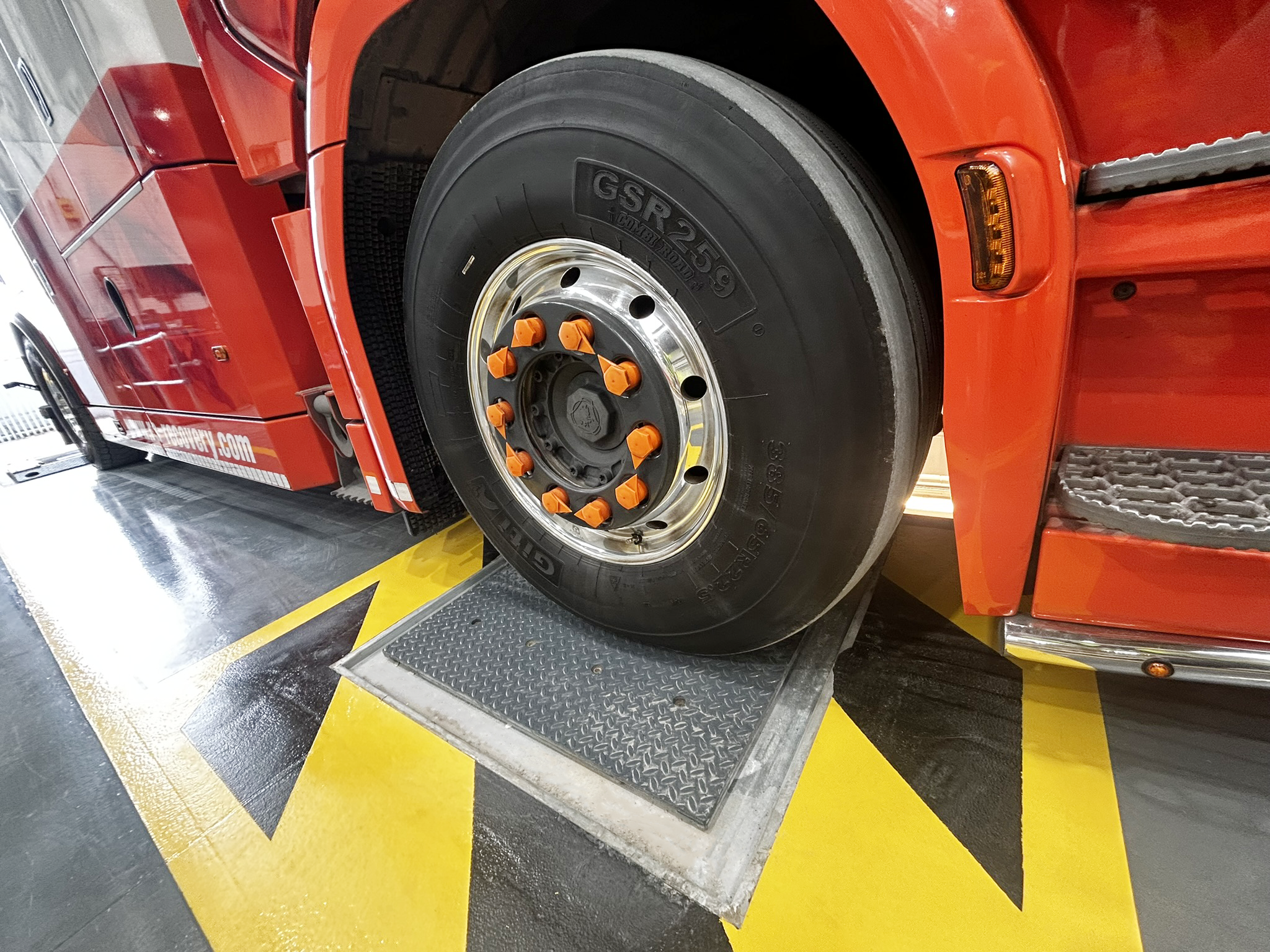
That applies to both plate brake testers and roller brake testers (like our Totalkare Mobile Brake Tester).
You don’t need to wait 6 months between every calibration — you can get a new calibration at any time during that 6-month period. So if you notice strange test results (or your brake tester suffers damage or needs repairs), it’s always a good idea to get an up-to-date calibration test for your equipment.
Headlamp testers
- Minimum: every 6 months
- After any repairs, damage, or unusual results
Inaccurate headlamp testing doesn’t come with the same obvious safety issues as brake testers. But they’re just as important, and the consequences can be just as serious.
If your headlamp testers are poorly calibrated, you could end up with headlamps that:
- Cause dangerous glare to other road-users
- Provide poor visibility at night (or in bad weather)
- Cause your vehicles to fail their MOTs (one of the most common reasons for failure).
The DVSA states that headlamp testers should be calibrated at least every 6 months.
Just like brake testers, you can carry out this calibration at any time during a 6-month period. So again, if you’re worried about the results or your equipment’s been damaged, the best option is to book a new calibration to make sure they’re performing as they should.
Emissions analysers
- Every 3, 6, or 12 months (depending on model)
- Diesel smoke meters: every 12 months
While you don’t have the same immediate safety concerns with a poorly calibrated emissions analyser, there are still serious compliance issues — and potential fines to face.
With inaccurate results on your emissions analysers, your vehicles could be running over the legal limits, especially in areas like tight regulations, like the ULEZ (Ultra Low Emissions Zone).
The DVSA states that emissions analysers should be calibrated every 3, 6, or 12 months, depending on the particular make and model of the testing equipment.
Tyre tread gauges
- Minimum: every 6 months
- Can be calibrated in-house
While tyre treads are always an important safety concern, it’s especially important as we head into the winter months, where wet and cold road conditions make your vehicle’s grip on the road even more essential.
Unlike most other tools, which require a qualified specialist to calibrate your testing equipment, tyre tread gauges can be calibrated in-house with a simple accuracy check — placing the base foot onto a flat surface, and checking that the zero datum’s align.
The DVSA states that tyre tread gauges should be calibrated at least every 6 months.
Need some help keeping up?
Calibrating your testing equipment is just one important part of keeping your workshop equipment safe and compliant.
And as your range of equipment grows with your workshop, it gets harder and harder to stay on top of all the regular services and maintenance you need.
That’s why lots of busy workshops get a service contract along with the equipment they choose — with regular scheduled visits from qualified engineers to keep their equipment healthy and performing at its best.
As well as scheduled service visits and a discount on parts, our own Afterkare service contract can also include regular calibration of your brake testers to DVSA standards.
You can see exactly what’s included in each of the different Afterkare service levels — or talk to a workshop expert to help you work through your options.