
5 best practices for safely using a hydraulic bench press
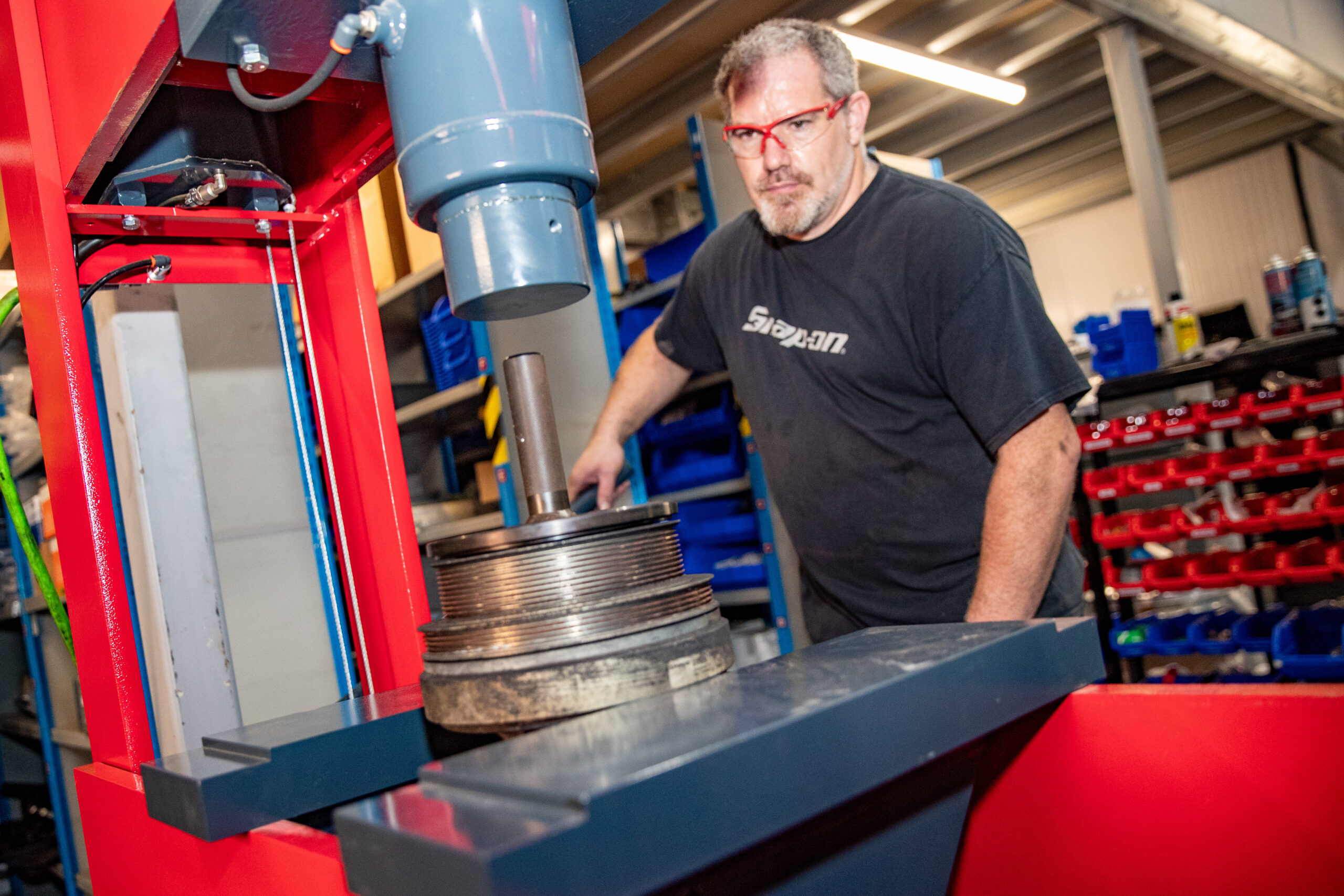
When we think of workshop safety, it’s easy to jump straight to what’s big and obvious:
Heavy-duty vehicles with huge components, and the kit that helps us move them safely.
But there are risks that come with small equipment, too — especially with the massive forces involved with a press.
Here’s what your teams need to know about using a hydraulic bench press:
1. Get the right training
This first step should be obvious. But for new members of staff, a hydraulic press can look deceptively simple:
It doesn’t fill the room or lift commercial vehicles — or come with complex electric controls.
But with the forces it can apply, the potential risks can be severe. So before any new hire starts using a hydraulic press, you need to make sure:
- Your teams have completed hydraulic press safety training
- They’re wearing the right PPE (such as protective glasses and gloves)
- Your hydraulic press is regularly maintained and repaired
- And your teams know how to inspect it before each use.
2. Spend time aligning your parts
Remember the old phrase: “Measure twice, cut once”?
It’s the same with a hydraulic bench press.
If the component you’re pressing isn’t carefully aligned, you can cause damage to the housing and surrounding components — or you could even get the part wedged further in.
So every time you press, you need to make sure:
- The part is centred on the ram or the punch
- The size of the ram matches the size of the part (as much as possible)
- The part is horizontally flat
- There’s equal weight and volume on either side of the ram (where possible).
3. Give the part support
Some parts and components won’t be a simple flat disc.
They’re often three-dimensional products with height and volume — with empty spaces inside, and parts of the structure that are weaker than others.
So as well taking time to find the right alignment, you also need to find ways to give the component the right support.
That could mean using a metal ring below the part when you’re using it as a hydraulic bearing press. Or it could mean propping up a shape that’s asymmetrical with a solid block on one side.
You might even need to improvise — using old components that are the right shape to give support, or cutting and grinding shapes yourself to get the right fit.
What’s important is that you make sure you’re using materials and shapes that can take the massive forces that a hydraulic press applies — which is why the right safety training is so important.
4. Use the gauge as a gauge
Any good hydraulic press comes with a gauge that displays the pressure being applied.
It’s a useful indicator when you need to apply an exact force — or for knowing when you’re getting close to the breaking point of a particular material or component.
But it can also give you clues about what’s going on inside the component:
When you match the movement of the ram to the force being applied, you’ll know when the press is coming up against new resistance. If the force is climbing higher but the ram isn’t moving further, that could mean the part you’re pressing has hit a snag inside the component — or that the part has hit the base and won’t go any further.
That could be an indicator that something’s gone wrong, or that you’ve already finished and you need to stop — giving you information about things happening inside that you couldn’t see with the naked eye.
If you’re using a press with a manual lever, you can get the same information as you pump the handle. If the resistance you feel changes as you pull down, that means something has changed inside the component — and you might need to stop and reassess the situation.
5. Don’t rush it
Hydraulic bench presses can apply some incredible forces — enough to shatter components and bend the hardest metals.
But they’re meant to apply those forces in a controlled and precise way. They’re designed to add incremental pressure slowly and evenly — which means you don’t need to rush if things aren’t working first time.
If the ram won’t go further or the resistance feels too high, that’s usually a sign that something isn’t right.
The best thing to do is to stop the pressure and remove the ram — and make adjustments to correct things before you continue.
That could mean adjusting the alignment of the part, or the supports you’ve added. Or it could mean you’re pressing from the wrong direction — or pressing on the wrong part.
If you rush with a hydraulic press, you’re not just risking a breakage or a cracked component. You’re risking the explosive shattering of the part and all its pieces, which can fly off at high speeds and cause serious damage to anyone nearby.
So just like with any piece of heavy-duty workshop equipment, you need to take your time and follow the safety guidelines — to keep your components healthy, and your teams safe from harm.