
Hydraulic press safety: The most common risks and hazards
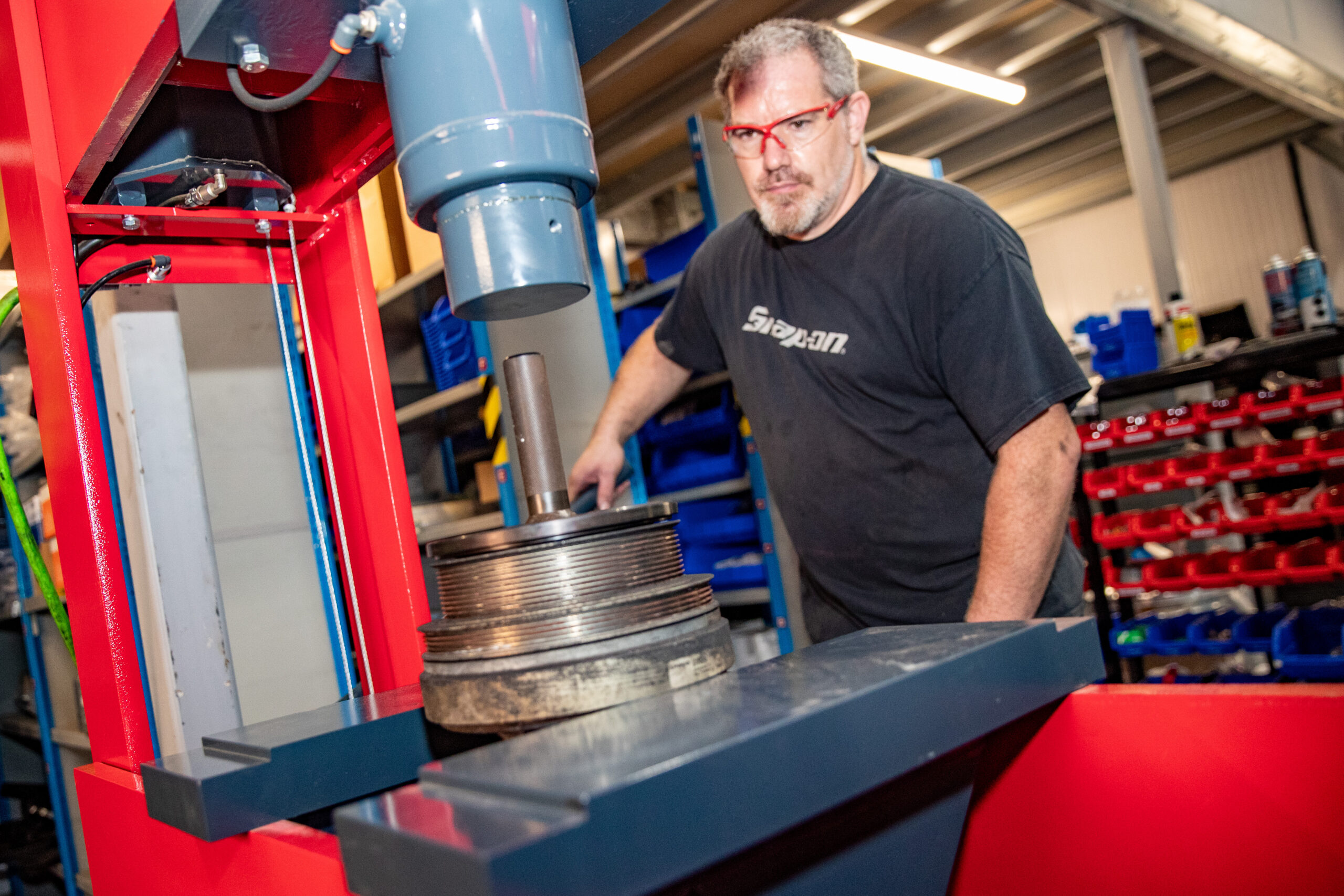
In a workshop packed with heavy-duty equipment, the smaller bits of kit don’t always get enough attention.
But with a hydraulic press, safety should always be a top concern:
Despite its smaller size, you’re dealing with incredible forces, with a technician working close to the action.
Here are the most common hydraulic press hazards — and the safety precautions you can take to reduce them:
1. Crushing and pinching
With so much force applied in a small area (and a frequent need to adjust positioning), there’s a very real risk of a severe injury to your fingers and hands.
Some of the most powerful hydraulic presses have capacities as high as 100,000kg. That’s enough to bend and snap the heaviest metal components — or cause extreme trauma to anything softer.
High-risk activities:
• Holding materials in place on the hydraulic press
• Adjusting positioning when the ram is lowered
• Clearing jams or cleaning surfaces when the press is powered on
Hydraulic press safety precautions:
• Full training on safe positioning rules
• Using hand tools to hold or adjust components
• Using guards or safety cages around the hydraulic press
2. Projectile parts
Under the extreme forces of a hydraulic press, even the strongest components can fail. That could mean a fracture, a rapid disassembly, or simply the entire component slipping from its position.
All of that pressure and energy needs to go somewhere — which often means metal parts flying off at incredible speeds.
High-risk activities:
• Pressing bearings, bushings, or components with springs
• Poor alignment when setting up the component
• The wrong support around the component you’re pressing
Safety precautions:
• Use the right supporting tools — press plates, V-blocks, or bearing separators
• Apply the press slowly, with a gradual build-up of force
• Use guards or safety cages around the hydraulic press
3. Overloading
Every hydraulic press comes with a maximum load capacity: the highest amount of force you can use with that machine to ensure the safety of your hydraulic press.
This maximum capacity needs to be respected — both with the model you choose to buy, and the ways your teams use it.
When you push a hydraulic press beyond its maximum capacity, you’re putting stress on the machine that can cause damage to its systems and components. This damage can lead to a catastrophic failure of the hydraulic press itself — with severe danger for the person using it.
High-risk activities:
• Pressing heavy-duty components beyond the limit of the hydraulic press
• Using a low-capacity press for high-capacity tasks
• Bypassing or ignoring the built-in overload valve and other safety features
Safety precautions:
• Always choose a hydraulic press with a built-in safety overload valve
• Assess the components and materials, and match them to the capacity of the press
• Regularly inspect and maintain the press — both the hydraulic systems and the frame
4. Off-centre loading
No matter what component you’re pressing, it should always be aligned with the centre of the ram and the die.
When you load a component off-centre, you’re creating an off-centre force — introducing a sideways direction that can cause twisting, tipping, or tilting of the ram.
As well as compromising the safety of the hydraulic press by causing damage, you also run the risk of causing the component to slip, leading to projectile parts that cause severe harm.
High-risk activities:
• Pressing uneven components — with irregular shapes or varying thickness
• Rushing through the alignment and setup stages
Safety precautions:
• Full training on safe positioning rules
• Assessing components to find a specific alignment for their shape and size
• Careful setup — checking a central alignment before every press
5. Hydraulic system failures
It’s easy to focus on the risks of the ram itself: the hard metal and high forces of using the hydraulic press directly.
But the hydraulic system itself can have problems — and the risks are no less severe. Even a tiny leak of high-pressure fluid can cause bodily trauma, and damage to the hydraulic system could cause the ram to descend without control.
High-risk activities:
• Broken hoses can spray high-pressure fluids that can penetrate or burn
• Damaged hydraulic systems can cause loss of control of the ram
Hydraulic press safety precautions:
• Always wear PPE (gloves, eyewear, etc.)
• Routinely inspect and maintain the hydraulic systems
• Immediately isolate and shut down the press if a leak or damage is suspected
Need a press that’s built for safety?
Even the smallest presses are serious business — and you should always choose carefully when it comes to the safety of your hydraulic press.
That’s why all our presses come with important safety features for every model, including:
• Built-in safety overload valves
• Built-in pressure gauges to give you more control
• Included V-blocks for correct positioning and stability.
You can see our full range of hydraulic presses (from 16,000kg up to 100,000kg) in our online shop — or talk to one of our workshop experts to help you find the right model for your shop.