
5 uses for a hydraulic press that save your workshop time and money
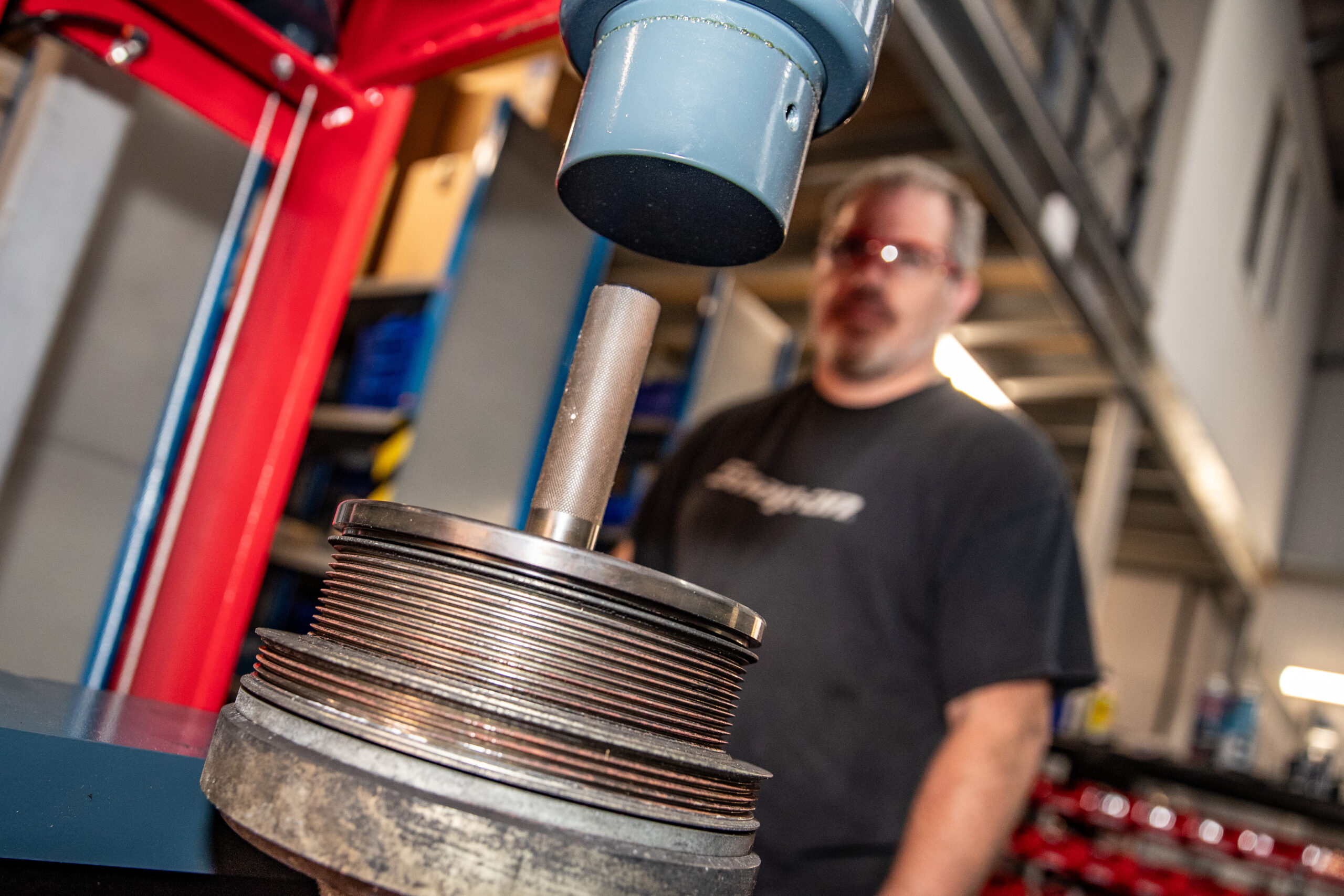
For some workshops, a hydraulic press is an essential part of their everyday toolkit. But for others, they may not be getting the most out of it.
It’s a versatile piece of kit that covers a wide range of applications — from removing and installing components, to bending and straightening metals.
So if you’re not sure it’s essential (or you’re thinking about an upgrade), here are the common uses for a hydraulic press you need to know:
1. Pressing bearings
This is one of the most common uses for a hydraulic press — and one of the main reasons vehicle workshops use them.
New wheel bearings need an incredibly tight fit, especially with heavy-duty vehicles where the loads and forces are much higher. Similarly, it takes an incredible amount of force to remove old bearings — and if the surrounding components are rusted, there’s a higher chance of causing damage.
Without using a hydraulic press for wheel bearings, your technicians are stuck using manual tools and methods. Besides being more difficult and exhausting, they won’t have the same precision and control, which can make the job less safe than it should be.
2. Suspension bushings
Similar to wheel bearings, suspension bushings need an incredibly tight fit. But unlike bearings, there’s often less material to push against, which makes it difficult to apply the right force.
With a hydraulic press, you have the extreme precision you need: to focus a huge force on a small surface area. In many cases, all you need is an additional ring of strong metal to act as a connector between the ram and the bushing.
3. Straightening and aligning
As well as installing and removing tight-fitting components, another use for a hydraulic press is to straighten components — like tie rods and drag link tubes that have become bent.
By setting up a raised support on either side below the bent component, you can create a gap in the middle for the ram to push down into, to correct a bend on even the toughest of metals.
With some of the heaviest parts found in commercial vehicles, this would be nearly impossible with hand tools. But with a hydraulic press, you can apply the exact force in the exact place you need, and control the pressure without the risk of over-correcting the bend.
4. Seized king pins
The king pin in a steering system undergoes extreme friction, especially in larger vehicles with heavier loads. Over time, this causes damage and a seized pin, and it needs a huge amount of force to push out a seized king pin.
Just like the bearings and bushings, this is exactly the kind of job a hydraulic press is made for — a massive controlled force, focused in a tight and precise area.
With a strong piece of metal at the correct diameter to act as a connector, you can transmit the force of the ram directly into the king pin, pushing it through its housing to release it.
5. Metal shaping
While it’s not always directly related to vehicle components, a hydraulic press can be useful for shaping and bending metal for other impromptu solutions.
That could mean:
- Creating metal brackets
- Punching holes in sheets of metal
- Shaping supporting surfaces for other tasks.
Looking for something stronger?
A hydraulic press is a hugely versatile piece of kit, with applications across a wide range of jobs in a workshop.
But for heavy-duty commercial vehicles — with the largest and heaviest components — you need to be sure you’re getting a press with the capacity to handle the vehicles you service.
You can see our full range of heavy-duty hydraulic presses in our online shop, from 16,000 kg capacities up to our strongest 100,000 kg press.
Or if you’re not sure what you need, start a chat with a workshop expert, and we’ll help you work through your options.